
Dental Implants at iSmile Dentistry: A Permanent, High-Quality Reset for Your Smile
Living with missing teeth can quietly change your life. Maybe you've started avoiding certain foods, or you cover your mouth when you laugh. Maybe you've been wearing a denture that never quite feels right. Whatever your situation, there's a good chance you've wondered what the best way to replace those teeth really is.
At iSmile Dentistry, we have a clear answer: dental implants. Dr. Jason Barton, one of our dental experts, has practiced implant dentistry for 30 years, and in that time he has always preferred implants over bridges and dentures. He has seen what they can do for patients, and he's seen the difference they make in how people eat, smile, and carry themselves.
In this post, we'll explain why implants are considered the gold standard, how they compare to other options, who can get one, why replacing a missing tooth matters, and how modern technology helps us plan your treatment. If you're exploring dental implants in Arizona or Utah, we hope this gives you the confidence to take the next step.
Why Dental Implants Are the Gold Standard for Missing Teeth
When someone comes to us with missing teeth, the right solution depends on how many teeth need to be replaced. Sometimes it's a single tooth. Sometimes it's a full arch, where a set of implants can support a full set of teeth in place of traditional dentures.
Across all of those situations, dental implants are the gold standard. That's not just a phrase we use. It reflects decades of experience watching how implants perform compared with the alternatives. Dr. Barton has worked with every option over the course of his career, and he continues to recommend implants because of how well they restore both function and confidence.
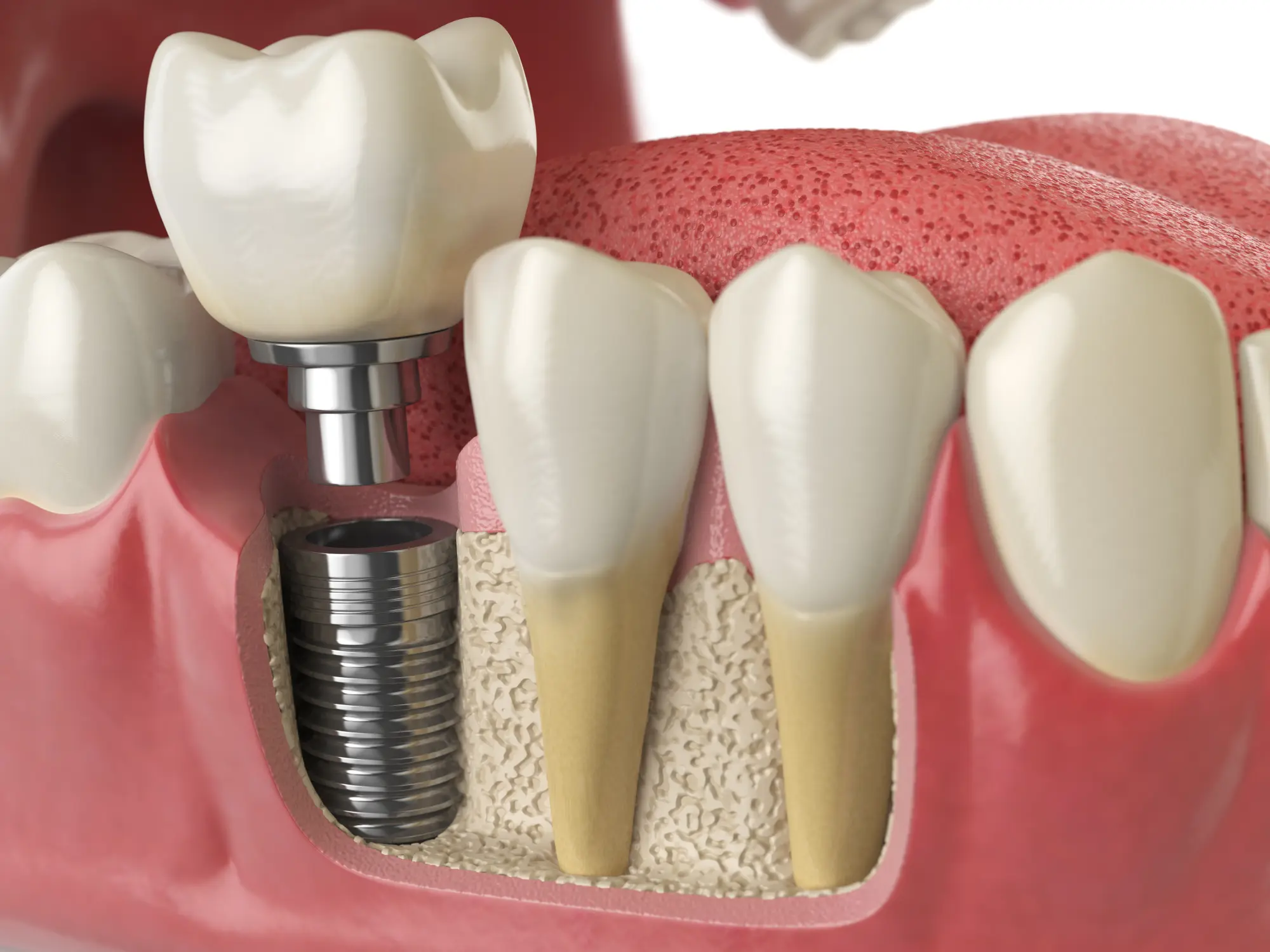
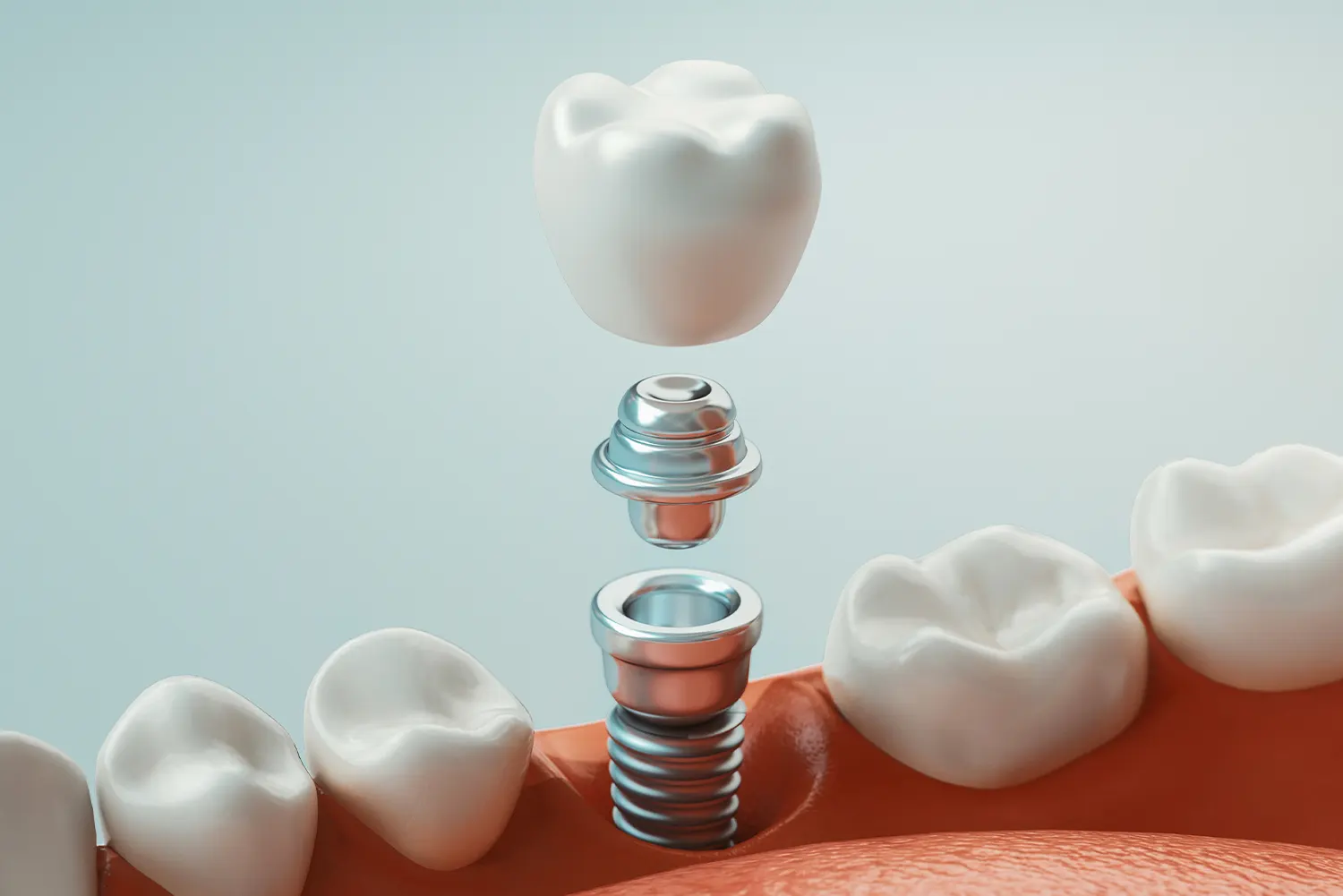
An implant replaces the part of the tooth you can't see, the root, and then supports a natural-looking tooth on top. That structure is a big part of why the results feel so different from other solutions.
Why an Implant Feels Like a Natural Tooth
The biggest reason patients love implants is simple: they feel like natural teeth. Let's look at how that compares to the other options.
A bridge replaces a missing tooth by connecting three teeth together, using the neighboring teeth for support. It can work well, but it's not the same as having an independent tooth.
Removable dentures are a different story. They have to come out of your mouth and go back in, and for many patients that becomes a daily frustration, especially around meals.
With an implant, none of that applies. You can floss it like a regular tooth. You can chew like you would with regular teeth. It behaves like a normal tooth in your day-to-day life, and it certainly beats something that has to be taken in and out every time you eat. For patients who are tired of working around their teeth, that freedom is a major relief.
Am I Too Old or Too Young for a Dental Implant?
This is one of the most common questions we hear. Many people worry that they've waited too long, or that they're too young to get an implant.
Here's the encouraging part: age is rarely the deciding factor. Dr. Barton's oldest implant patient was 99 years old. That patient was so happy with the result that he came back two years later, at age 101, for another implant.
What matters most is your overall health and your bone structure. Typically, if you're reasonably healthy and have good bone, we can place dental implants. During your consultation, we'll look at your specific situation and let you know where you stand.
Do I Really Need to Replace a Missing Tooth?
Patients often ask whether they truly need to replace a missing tooth, especially if it's toward the back of the mouth or not very visible. The answer is yes, and there are good reasons why.
The moment a tooth comes out, a few things begin to happen. First, the teeth on either side of the gap begin to tilt toward the open space. That creates new gaps and changes how your teeth fit together, which can make it hard to bite down well.
Second, the bone in that area begins to dissolve. This is something many people don't realize. Without a tooth root to stimulate it, the bone gradually shrinks, which can make it much more difficult to place an implant later on.
So replacing a tooth isn't only about appearance. It helps you eat well and keeps your remaining teeth from shifting out of place. The sooner you address a gap, the more options you tend to have.
How 3D Scanning and AI Help Us Plan Your Implant
One of the greatest advances in modern dentistry is the technology we now use to see inside your mouth. At iSmile Dentistry, we use 3D scanning and AI to get a detailed look at your anatomy before we ever place an implant.
This technology helps us assess the quality of your bone and determine exactly where an implant can be placed for the best long-term success. That kind of precision matters, because a well-planned implant is far more likely to last.
As with everything we do, this technology supports our doctors and never replaces their judgment. Our team reviews your scans, confirms what we see clinically, and talks you through the plan so you understand every step.
Can an Implant Replace a Failed, Broken, or Traumatized Tooth?
Patients come to us for implants for many different reasons. Some arrive with a failed root canal. Others have a tooth that has broken off at the gum line. And some have lost a tooth due to an accident or trauma of some kind.
A common question in those situations is whether an implant can be placed in that area. In most cases, the answer is yes. An implant can be placed where the tooth used to be, and it's important to do so for function, for aesthetics, and for anything else that helps keep your mouth healthy over time.
If you've experienced a tooth loss like this, we'd be glad to evaluate your options and help you understand what comes next.
Missing Teeth for Years? You May Still Be a Candidate
Some patients have lived with missing teeth for many years. Over that time, the bone may have dissolved, eating may have become more difficult, and smiling may not feel as natural as it used to. If that sounds like you, you may assume that implants are no longer possible.
We invite you to come in for a consultation anyway. During your visit, we'll look at the quality of your bone and see whether you're a candidate for implants. In most cases, patients are, because there are advanced procedures we can use when needed. They're not always necessary, but sometimes they are, and they can open the door to an option that may have felt out of reach.
From there, we'll use our technology to map out the best path forward and provide you with dental implants.
"I Should Have Done This Years Ago"
After we finish a patient's implant treatment, one comment comes up again and again: they wish they'd done it sooner. And it's easy to understand why. Patients tell us they can eat better, smile better, and feel more confident when they're out in public.
Those aren't small changes. For many people, dental implants are truly life changing, and they give back things that missing teeth quietly took away.
If you've been thinking about replacing a missing tooth, or several, we'd love to help. Call us to schedule an implant consultation at one of our iSmile Dentistry locations throughout Arizona and Utah. We'll take a close look at your bone and your goals, walk you through your options, and help you plan a smile that lasts. You can also learn more about our practice at ismiledentists.com.
Share
Related Posts
October 13, 2026
Single Implant vs. Bridge: The Best Choice for Missing Teeth
Explore more blogs
October 13, 2026
Dentistry for Everyone: High-Quality Dental Care That Fits Your Family Budget
October 13, 2026
When Is Extraction Necessary? Saving the Tooth vs. Removal
October 13, 2026
Single Implant vs. Bridge: The Best Choice for Missing Teeth
October 13, 2026
How AI Is Changing the First Dental Visit
June 3, 2026
Scaling & Root Planing: Why a “Deep Cleaning” is the Secret to Saving Your Smile
June 3, 2026
Sealants for Adults: Cavity Protection Beyond Childhood
June 3, 2026
In-Office Teeth Whitening in Tucson: What to Expect and How to Maintain a Brighter Smile
July 22, 2026
Fluoride Safety, Benefits, and How It Helps Prevent Cavities
.avif)